Supplier Data Is Where PIM Projects Fail — Before the Project Even Starts

PIM Implementation
Data Governance
Enterprise
B2B
March 12, 2026
.jpg)
Yassine.F
A comprehensive guide to enterprise PIM implementation: how to scope projects without getting burned, build the right team, avoid the 7 root causes of failure, and measure ROI.
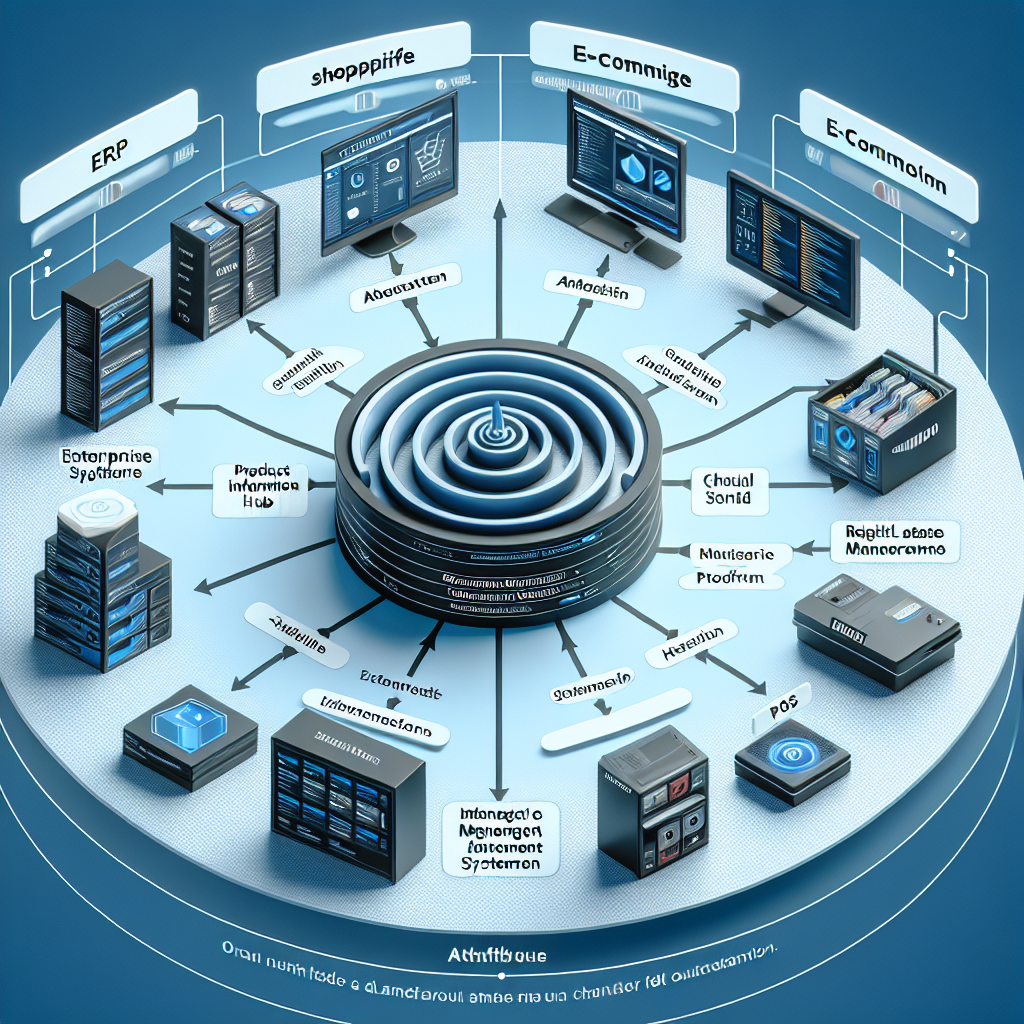
Product Information Management (PIM) is no longer optional for enterprises managing product catalogs across multiple channels. Yet 70% of PIM projects underperform or fail entirely. This guide covers the real implementation approach: from scoping without getting burned, to team structure, timeline reality, and measuring ROI.
A PIM system is a central repository for all product information—names, descriptions, images, pricing, attributes, SKUs—that syncs to every sales channel and backend system. It replaces the spreadsheet-and-email chaos that scales into operational collapse.
The goal is straightforward: one source of truth, updated once, distributed everywhere. In practice, it requires governance, integration, and a team that can execute.
Not every brand needs a dedicated PIM. You need one if:
If you have one product catalog, 200 SKUs, and a single sales channel, a PIM is overhead. If you fit any of the above, you're already paying for PIM through operational chaos and data errors.
Failures happen for predictable reasons. Here are the 7 root causes:
1. Vague Specifications
You buy a PIM because your spreadsheets don't work, then realize you've never documented what “working” means. Attributes are undefined, workflows are unclear, and integration points are guesses. By month 3, everyone has a different idea of what the system should do.
2. Wrong Team Size
Enterprises assign two people to a project that needs five. Then they add contractors in month 4, when expertise transfer is broken. The team is too small to deliver; adding people late makes it worse.
3. Underestimated Integration Work
PIM doesn't exist in a vacuum. It connects to ERP, WMS, e-commerce, DAM, and analytics. These integrations are where projects die—80% of implementation time, not 20%.
4. No Data Governance Model
You implement PIM but never define who owns each data field, who can edit it, and what the quality rules are. Data quality degrades immediately because no one is accountable.
5. Inadequate Data Migration
Spreadsheets and legacy systems contain garbage: duplicates, bad SKUs, missing translations, inconsistent formats. You can't “just migrate” this mess; you must audit and cleanse first. This takes 2-4 months and is never budgeted.
6. Misaligned Stakeholder Expectations
IT thinks it's a data system. Marketing thinks it's a content hub. Commerce thinks it's a catalog publication tool. Everyone gets a different system, and no one is satisfied.
7. Inadequate Training & Adoption
You go live and users don't know how to use it. They revert to spreadsheets. Six months later, data in PIM is stale because no one maintains it.
Scoping is where project success is won or lost. Here's the discipline:
Phase 1: Current State Assessment (2–3 weeks)
Don't start with a vendor. Start with an audit: map every system that touches product data, how it flows, what breaks. Interview finance, supply chain, commerce, marketing. Quantify the pain: how many SKU errors per week? How long does a catalog update take? What's the cost of bad data?
Phase 2: Define Data Model (3–4 weeks)
Document every attribute you need, by entity (product, variant, bundle, offering). Define relationships: SKU to product hierarchy, product to supplier, variant to warehouse. Map this to your ERP and e-commerce schema. This becomes your functional specification—it's not a guess; it's a blueprint.
Phase 3: Integration Mapping (2–3 weeks)
Draw the integration landscape: what connects to PIM, in what direction, how often, what transformation rules. This is where hidden complexity surfaces. A system you thought was simple (ERP sync) often requires custom logic.
Phase 4: Build the Playbook (2 weeks)
Document workflows: how does a product move from conception to live across all channels? Who approves? What are the quality checkpoints? This becomes your governance model and your training blueprint.
Phase 5: Budget Reality (1 week)
Now estimate: software licenses, implementation services, internal team costs, data migration labor, training. Reality: your software license is 30–40% of total cost. Integrations, migration, and team are 60–70%.
This scoping takes 8–12 weeks and costs 40k–80k€. It saves you 500k€ in scope creep and rework later.
Team structure determines success or failure. You need:
Avoid: assigning this to your IT operations team part-time. They will deprioritize it; you will slip. Avoid: hiring junior team members. You need experience because decisions are irreversible.
| Phase | Timeline | Team Size | Key Deliverable | Typical Cost |
|---|---|---|---|---|
| Scoping & Assessment | 8–12 weeks | 5 FTE | Functional spec, data model, integration map | 40k–80k€ |
| Vendor Selection | 4–6 weeks | 3 FTE | Vendor signed, contract terms agreed | 5k–15k€ (consulting) |
| Build & Config | 12–16 weeks | 6 FTE | PIM configured, integrations in dev, test data loaded | 120k–200k€ (partner + internal) |
| Data Migration | 8–12 weeks | 4 FTE | Legacy data audited, cleansed, loaded into PIM | 80k–150k€ (specialists + tools) |
| Testing & UAT | 6–10 weeks | 5 FTE | UAT sign-off, defects resolved, go-live plan | 60k–100k€ |
| Go-Live & Stabilization | 4–8 weeks | 6 FTE | Live in production, issues resolved, knowledge transfer | 80k–150k€ |
| Total Project Duration | 9–18 months | Avg 5 FTE | PIM live & stable | 385k–695k€ |
Hidden costs to budget for:
ROI calculation trap: Don't measure PIM success by adoption rate or number of products managed. Measure it by: (1) reduction in manual data entry hours, (2) decrease in SKU errors in live catalogs, (3) cycle time to launch new products, (4) reduction in inventory mismatches caused by data sync failures. These are cash flows; adoption is a lagging indicator.
PIM ROI is typically realized in 12–18 months. Here's how to measure it:
Metric 1: Data Entry Labor Reduction
Before PIM: Estimate hours per week spent on spreadsheet updates, formula fixes, and manual syncs. Multiply by labor cost (load rate). After PIM: Same estimate in the PIM world. Difference is your labor savings. Typical: 40–60 hours/week saved = 50k–80k€/year.
Metric 2: Error Reduction
Track SKU errors in production (wrong price on e-commerce, missing attributes on marketplace, inventory mismatches). Calculate cost per error (lost sales, manual fixes, customer service). Before PIM: errors/week. After PIM: errors/week. Difference × cost per error = savings. Typical: 30–50% error reduction = 100k–200k€/year.
Metric 3: Cycle Time to Market
Time from “product approved” to “live on all channels.” Before: 2–4 weeks (manual spreadsheet updates, QA, manual syncs). After: 1–2 days (PIM approval > auto-sync). Faster time-to-market = revenue acceleration. Difficult to quantify but high-impact.
Metric 4: System Downtime & Integration Failures
Before PIM: lost sync events, marketplace de-lists due to missing inventory, customer-facing data gaps. Calculate cost per incident. After PIM: centralized system reduces integration points and failure modes. Typical savings: 20k–50k€/year in reduced incidents.
Total First-Year ROI: 170k–380k€ in hard savings. With project costs of 385k–695k€, payback is typically 18–24 months.
Don't pick the biggest or cheapest. Pick the one that:
Common vendors: Akeneo (open-source, flexible, strong integrations), Salsify (e-commerce focused, expensive), Contentful (headless-first, developer-friendly), Inriver (retail-focused, expensive).
If you're considering PIM, start here:
We've led 20+ enterprise PIM scoping exercises and implementations. Let's talk through your architecture and timeline.
Book a Discovery CallPIM implementation is not a software problem; it's a governance and integration problem. Success hinges on clear scoping, the right team, realistic timelines, and disciplined execution. The 7 root causes of failure—vague specs, wrong team size, underestimated integration, no data governance, inadequate migration, misaligned expectations, poor adoption—are all preventable with proper planning.
Enterprise PIM ROI is real: 170k–380k€ in first-year savings, with payback in 18–24 months. But you must scope first, build the business case, and execute with discipline. Start with an 8–12 week scoping engagement. That investment pays for itself many times over.
Summary
Field notes from enterprise integration projects. PIM, MACH, AI adoption what the project plans never tell you
Quick boost : tailored tips to grow fast and shine online. Ready to start fresh?
Click to clear and create !